
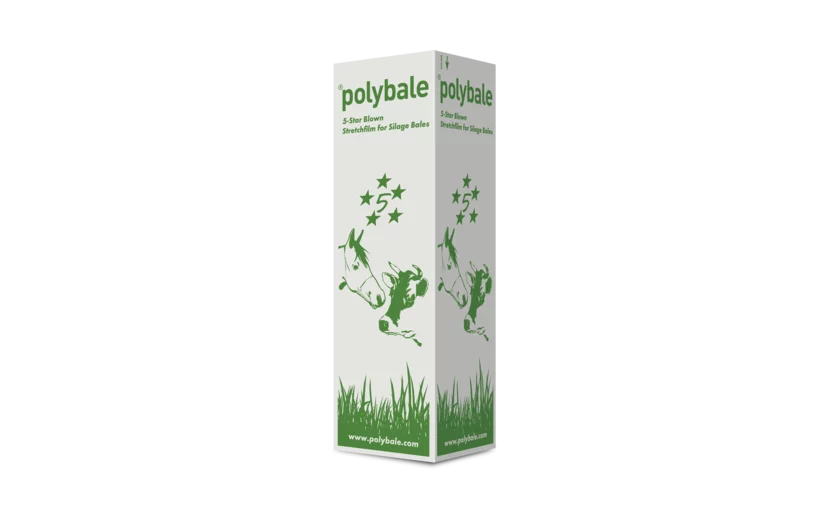
Polybale Stretch Wrap

Length:
1,800 M1,500 M

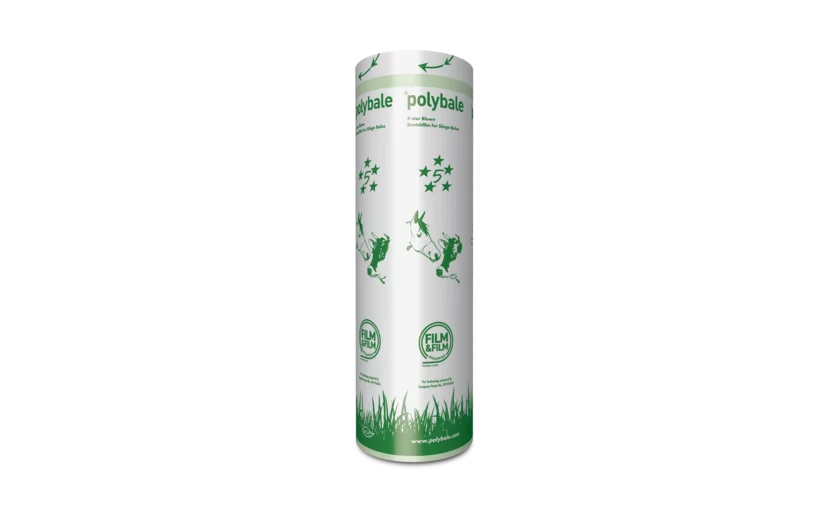
The 5 star wrapping film for silage bales
Polybale’s high strength stretch and tear resistance helps to ensure 100% efficient wrapping. With construction that ensures the production of a higher-density stretch film, Polybale minimizes gas permeability across the total surface of the film. This in turn optimizes the silage fermentation process.
Polybale 500x1800 Light Green

Features & Benefits

Strength

Strength

PolybalePro high strength stretch, and tear resistance helps to ensure efficient wrapping.
Versatility

Versatility

Suitable for both round and square bales across a variety of crops on all types of bale wrappers time after time.
Top Quality assurance

Top Quality assurance

Our zero-tolerance approach to poor product quality ensures the production of a silage stretchfilm that delivers highly efficient bale wrapping.
Automatic thickness control

Automatic thickness control

Thanks to continuous electronic monitoring of the film thickness throughout manufacture, Polybale has a uniform appearance at all stages of the wrapping process. These non-stop checks ensure the production of a consistently reliable film that provides trouble-free wrapping 24 hours a day

5 star technology

Polybale is produced using specially selected high quality raw materials. These superior ingredients are directed to the film layer where they are most needed to ensure the production of an advanced stretch film with superior performance characteristics.

Specifications

4 Products

Previous Next

Map Title

Choose Your Category Text

Results Text (0) View All Experts Text

More ways we can assist

Service request Icon

Service request

Knowledge Centre Icon

Knowledge Centre

Training Icon

Training

Field experts Icon

Field experts

Stretchfilm?

What is the difference between 25-micron and 22-micron thicknesses as far as use by the farmer?
Assuming the ‘mechanical properties’ of the film are good enough, which most top manufacturers are, the main guarantee of good silage concerning the film, is that it seals well, and each application overlaps the last by at least 50%, with the best results coming from the application of at least 6 film layers. The actual difference in thickness of film going onto the bale, after the stretching rollers, is insignificant.
Why are silage bales better than pit or clamp silage?
Why do I get long tales on the bale after baling?
Skip to content